Corn and Wart: Images and Effective Treatment Methods
A corn and a wart are common skin problems that affect many people’s lives. Both are lesions that develop on the surface of the skin, but they arise from different causes and have different appearances. A corn typically develops due to friction and pressure on the skin, while a wart is caused by an infection of the HPV (human papillomavirus). The two lesions often look similar, making it difficult to distinguish between them, so it is important to have the right knowledge.
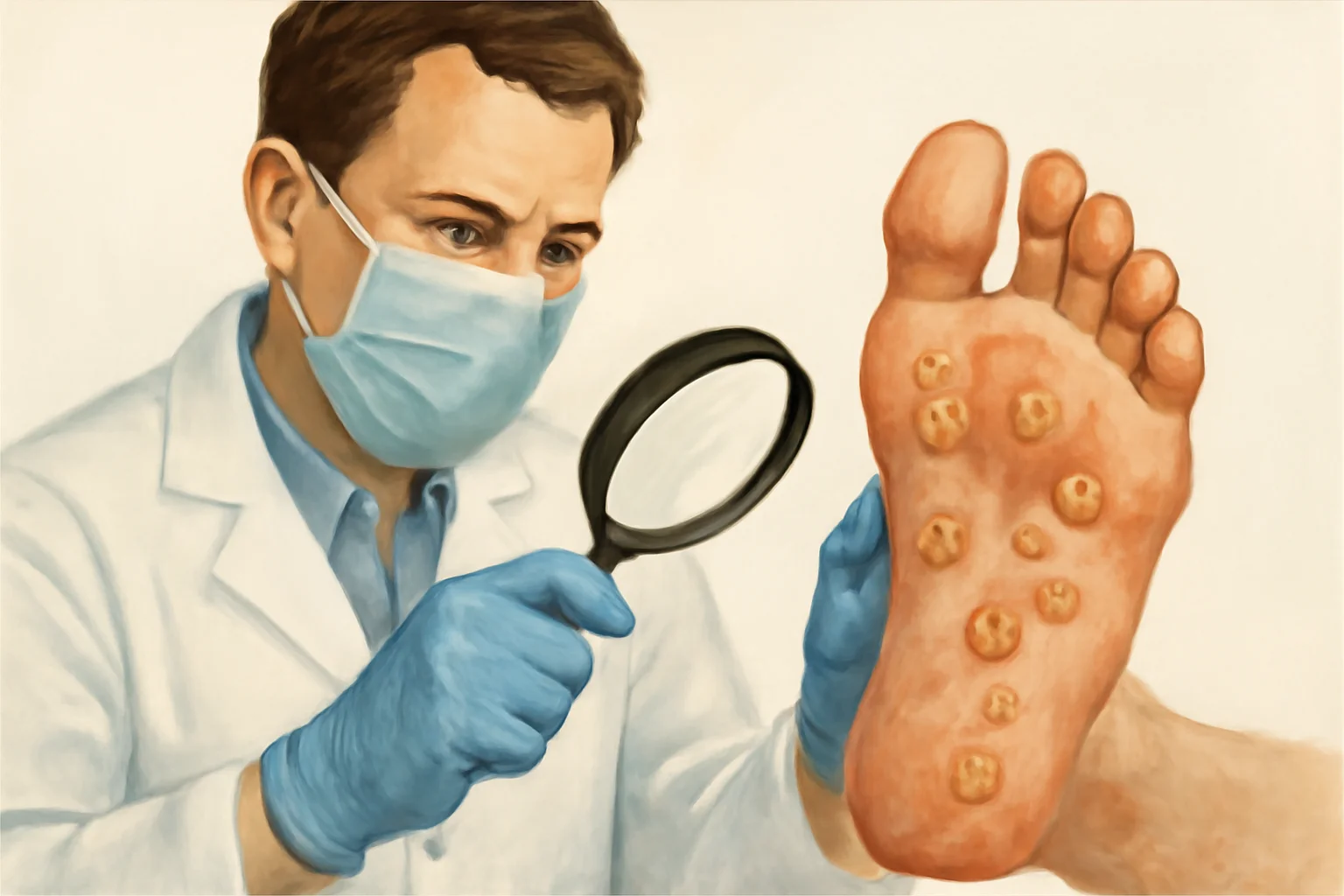
Corns typically occur on the soles of the feet or between the toes and can form hard, painful areas. In contrast, warts mostly appear on the hands and feet and are generally smoother in texture than corns. The treatment for the two lesions also differs, which is why it is important to be aware of the differences and know when to seek medical advice. Accurate diagnosis is crucial for effective treatment, so images and proper information can aid in precise identification.
Corns: Symptoms and Causes
A corn is a thickening of the skin that usually develops on the soles of the feet or on the toes. It manifests as a hard, painful area that results from friction on the skin. Causes include issues related to foot shape, improper footwear, or excessive sweating of the feet. Asymmetry in the feet, excessive pressure, or deformities of the foot can also contribute to the formation of corns.
The appearance of corns develops gradually and is initially perceived as a small, painful area. As external pressure continues, the skin thickens, and the size of the corn may increase. The pain usually intensifies, especially during walking or standing. Treatment for corns is generally conservative and may involve selecting appropriate footwear, protecting the skin, and removing the corn if necessary.
From a prevention standpoint, it is important to pay attention to foot health. Wearing proper footwear that does not rub against the skin and providing adequate support for the foot is essential to avoid corns. Additionally, regular foot care, such as moisturizing the skin and monitoring for corns, can help prevent problems.
Warts: Symptoms and Treatment Options
Warts are skin growths caused by the HPV virus, which can appear in various forms and sizes. They are typically rough in texture and can appear on the hands, feet, and even the face. Warts are highly contagious and spread through direct contact, as well as appearing in areas where the skin is damaged.
There are different types of warts, such as common warts, plantar warts, and flat warts. Common warts are usually found on the hands and fingers, while plantar warts develop on the soles of the feet and can cause pain while walking. Flat warts typically appear on the face and neck and have a smoother surface than other types.
Wart treatment can be done through various methods. There are numerous home remedies available, but their effectiveness can vary. Over-the-counter products available at pharmacies can also help in removing warts. If warts do not respond to treatment, medical assistance may be necessary, where a doctor may recommend various procedures such as freezing, laser treatment, or surgical removal.
It is important not to delay the treatment of warts, as they can easily spread to other areas of the skin or to other people. Regular check-ups and proper hygiene can help in preventing and treating warts.
Differentiating Between Corns and Warts
Distinguishing between a corn and a wart is not always straightforward, as they can often look similar. However, a few key differences can aid in accurate diagnosis. First, a corn is generally hard, yellowish or whitish in color, while warts can vary in color and often have a rough, raised surface.
The location of corns is also distinctive; they are usually found on the soles of the feet or between the toes, while warts can appear anywhere on the body, most commonly on the hands and feet. Corns are typically painful, especially during walking, while warts often do not cause pain unless pressure is applied.
Examinations by a dermatologist can be very helpful for differentiation. A specialist can determine which lesion it is and recommend appropriate treatment. If there is uncertainty about whether it is a corn or a wart, it is advisable to consult a doctor to avoid incorrect treatment.
Images available online can also be useful for identifying corns and warts. Pictures can assist laypersons in more accurately identifying their skin problems, but it is important to note that it is best to consult a doctor for a definitive diagnosis.
**Warning:** This article does not constitute medical advice. Always consult your doctor for health issues.