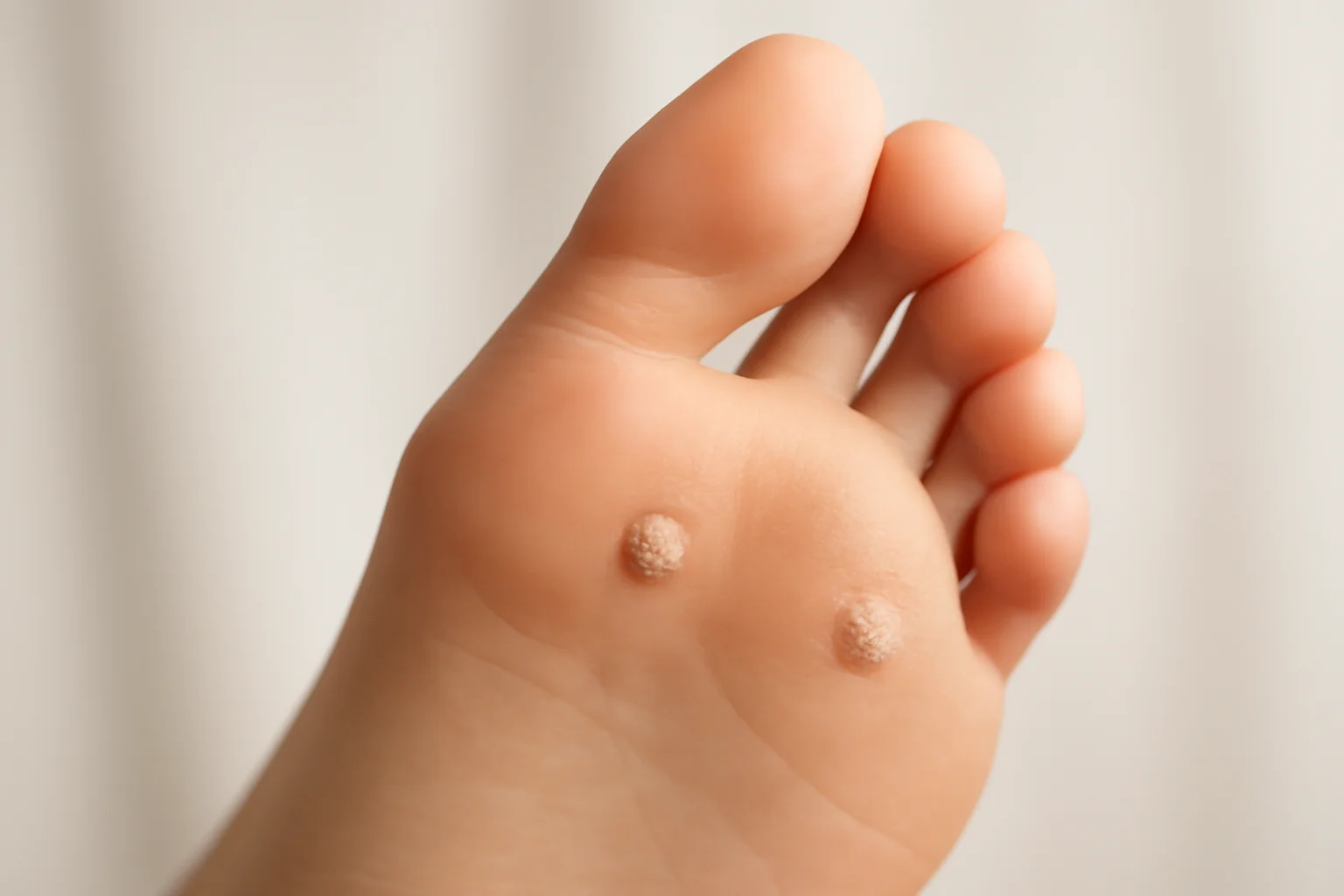
Corn or wart: What is the difference and how to treat them?
The corn and the wart are two skin issues that affect many people and are often confused with each other. Both are prominent skin lesions, but they arise from different causes and have different appearances. Corns typically develop as a result of increased pressure on the skin, while warts are lesions triggered by a viral infection. Understanding the difference between the two is crucial for proper diagnosis and treatment, as each requires a different approach.
Corns usually appear on the toes, the sole of the foot, or other areas where the skin is subjected to greater pressure. Warts, on the other hand, are generally found on the hands, feet, or other skin surfaces, and they are caused by the HPV (human papillomavirus). Although both can cause discomfort, their treatment and prevention require different methods. In the following sections, we will take a closer look at corns and warts, their causes, symptoms, treatment options, and finally, prevention strategies.
Corns: Symptoms, Causes, and Treatment Options
Corns, also known as keratomas, are thickened areas of skin that develop as a result of skin pressure or friction. They are most commonly found on the soles of the feet, on the toes, and on the heels. Corns are typically hard, yellowish, round lesions that can be sensitive to pressure.
The main cause of corns is skin friction and continuous pressure, which can be caused by footwear, improper shoe choices, or foot shape anomalies. Those who spend a lot of time standing or who engage in sports are also at a higher risk for developing corns.
Treatment for corns generally does not require medical intervention, but to reduce pain and discomfort, the following steps are recommended:
1. **Shoe Selection**: Wear comfortable, well-fitting shoes that do not rub against your feet. Proper insoles or orthopedic solutions can also help reduce pressure.
2. **Corn Removal**: Removal performed by a dermatologist is a painless and effective way to treat corns.
3. **Home Treatments**: Over-the-counter corn removal patches and solutions can also help eliminate corns.
4. **Rest and Foot Care**: Resting the affected area and regularly moisturizing the feet can aid in healing.
To prevent the formation of corns, it is important to maintain foot care, wear appropriate footwear, and consider foot shapes.
Warts: Types, Causes, and Treatment Options
Warts are generally benign lesions that appear on the surface of the skin, caused by the human papillomavirus (HPV). There are many types, depending on where they are located on the body and their appearance. The most common types include common warts, plantar warts, and flat warts.
Common warts typically appear on the back of the hands, fingers, and elbows, while plantar warts occur on the soles of the feet, and flat warts can be found on the forehead and neck. Warts are contagious and can easily spread through direct contact or surfaces like shared showers or pools.
Treatment options for warts include:
1. **Home Treatments**: Over-the-counter wart removal products, such as salicylic acid solutions and patches, can help eliminate warts.
2. **Medical Treatments**: Cryotherapy, laser treatment, or electrocautery performed by a dermatologist are effective methods for wart removal.
3. **Immunotherapy**: Treatments that stimulate the immune system can also help eliminate warts.
To prevent the formation of warts, it is essential to maintain personal hygiene, be cautious in shared spaces, and preserve the integrity of the skin.
How to Distinguish Between Corns and Warts?
Understanding the difference between corns and warts is key to selecting the appropriate treatment. The primary considerations are their appearance and location.
Corns are typically yellowish, hard lesions located on the affected area and are often painful to pressure. In contrast, warts can be much more varied in appearance and are generally softer, and not always painful. Warts usually protrude from the skin surface and may contain small black dots on the skin surface, which are thickened blood vessels.
To establish a diagnosis, it is important to consult a dermatologist who can determine which lesion it is. The doctor can provide an accurate diagnosis based on examinations and medical history and recommend appropriate treatment.
From a prevention standpoint, maintaining foot care and hygiene is crucial. To prevent corns, it is advisable to wear well-fitting shoes, while cautious movement in shared spaces is recommended to avoid warts.
This article does not constitute medical advice. Always consult a doctor for health issues.